AI Systems
RAG pipelines with hybrid BM25 + vector search, multi-provider LLM gateways (Groq → OpenRouter → NVIDIA → Google → deterministic fallback), streaming chat, and zero-cost local inference. Proof: Readstacks, MaldaOS AI triage.
Short version: I learn by shipping, and everything on this page is verifiable in a repository.
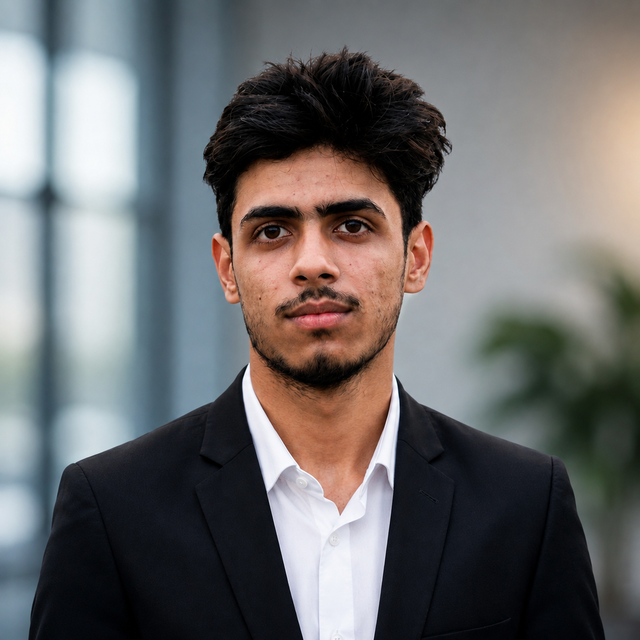
I learn by shipping real software. Since 2023 that has meant full-stack platforms, Telegram and Discord bots, Python automation pipelines, and a private local RAG system — each with tests, documentation and a containerized deploy, because unverifiable software doesn't count as finished.
My workflow is AI-assisted (OpenCode agent): it accelerates implementation, while architectural discipline — reviewed schemas, automated tests, CI on every push — stays non-negotiable.
Clear deliverables, production-ready architecture, containerized deployments, and 30-day post-launch support.
RAG pipelines with hybrid BM25 + vector search, multi-provider LLM gateways (Groq → OpenRouter → NVIDIA → Google → deterministic fallback), streaming chat, and zero-cost local inference. Proof: Readstacks, MaldaOS AI triage.
APIs, PostgreSQL/SQLite, JWT auth, RBAC and Supabase RLS, SECURITY DEFINER RPCs, audit logging, BullMQ queues and Redis rate limiting. Proof: MaldaOS (53 RLS policies, 27 RPC functions, 8 migrations), Picfix (BullMQ + Redis).
SSE token streaming with mid-stream provider failover, Discord gateway event dispatch, Lavalink audio streaming, polling schedulers. Proof: Readstacks SSE chat, Pixel-Assistor.
Telegram and Discord bots, headless scraping (BeautifulSoup4, Playwright), cron daemons, expense/habit schedulers, payment QR flows. Proof: Alya (40-skill registry, 41 Rasa intents), LifeOS, college notification bot, Blitz Game Zone.
Docker and Compose, Nginx reverse proxy with TLS, PM2 process management, GitHub Actions CI, systemd/cron daemons. Proof: every flagship repo ships a Dockerfile or Compose stack; live today at readstacks.duckdns.org.
I work across the full lifecycle — not just UI. MaldaOS, Picfix and Pixel-Assistor each carry tests, security controls, containerized deployment and production process management to back that claim.
Six flagship systems — every one designed, written, tested, secured and deployed by me. Metrics below are measured from each repository, not marketing copy.
Campus Operations & Issue Resolution Platform with Supabase RLS, role-based workflows, AI triage, audit logging and 3D campus visualization.
Problem: campus issues (broken infrastructure, maintenance requests, safety hazards) get reported through informal channels, get lost, and have no verifiable resolution trail. Solution: an institutional command ledger — students file structured reports with evidence and location, department staff get dispatched work orders, and every lifecycle transition is database-enforced and audit-logged. Result: a resolution trail anyone can audit — 198 automated tests, 53 RLS policies and fail-closed production guards, verifiable in the repo today.
Supabase RLS + SECURITY DEFINER RPC + database role enforcement. Roles come from profiles.role in the database — never browser metadata. Seeded demo logins are hard-blocked in production and eliminated from the client bundle at build time.
AI output is advisory-only (category, severity, priority, summary, confidence) that a human operator accepts or rejects. The deterministic fallback is always labelled and never claims to be a model response; the core report → assign → resolve → verify workflow works with zero providers configured.
Every mutation writes to audit_logs (super-admin view at /admin/audit with CSV export). Status transitions are database-enforced: OPEN → ASSIGNED → IN_PROGRESS → RESOLVED → CLOSED, with a 7-day student reopen window.
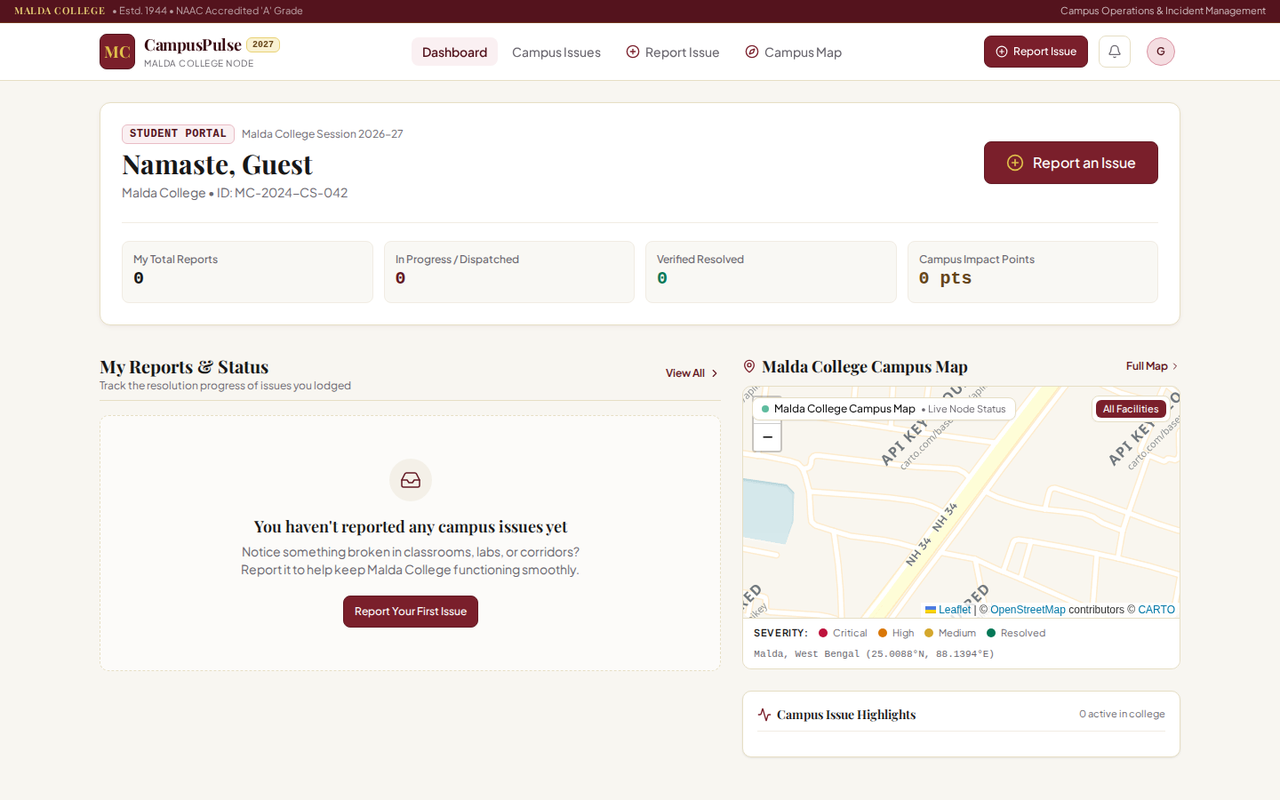
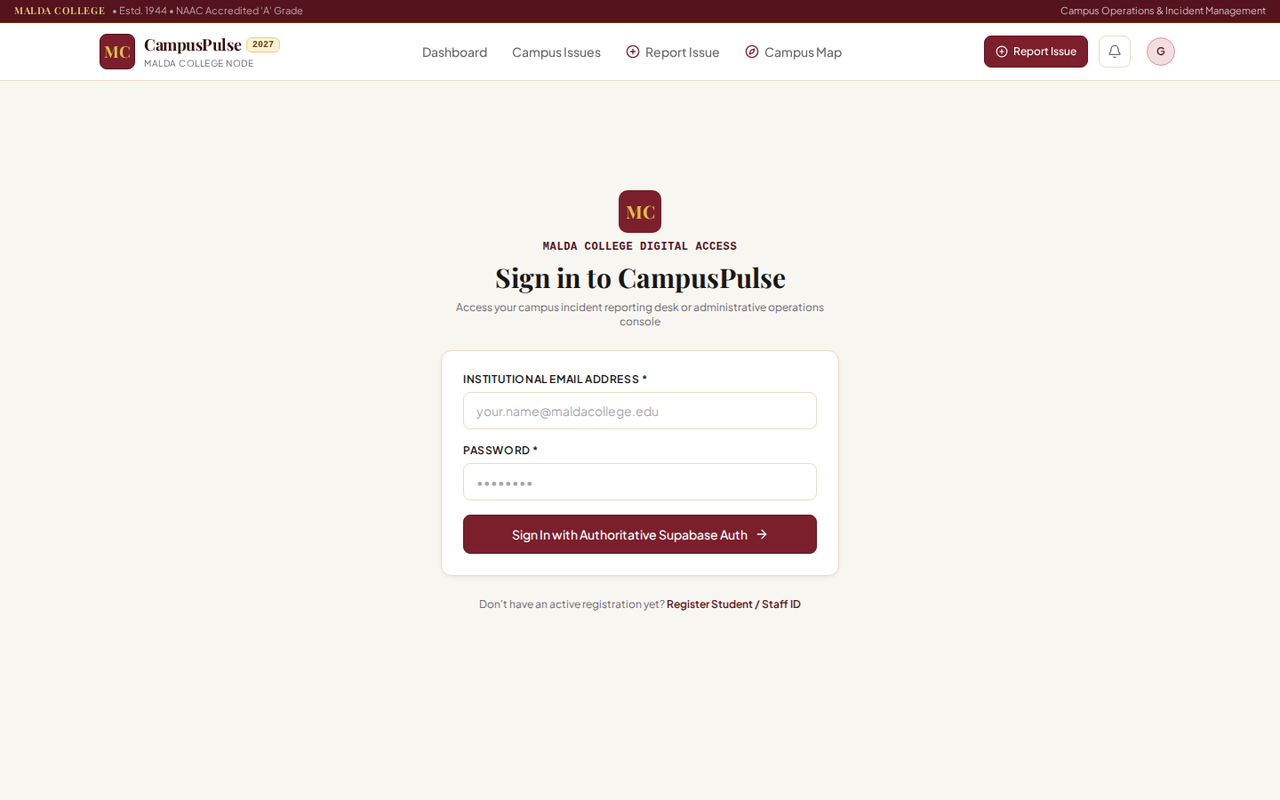
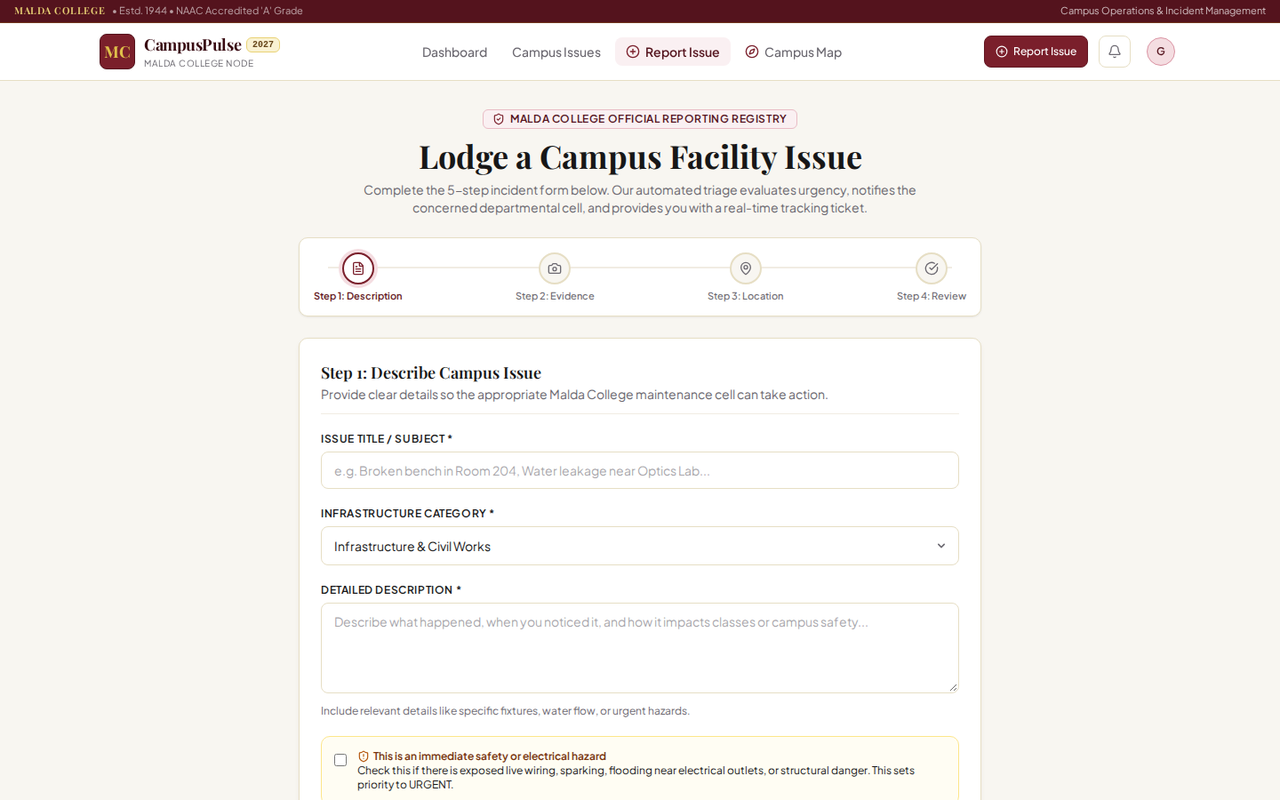
> 53 RLS policies · 27 RPC functions · fail-closed prod guards
Self-hosted Discord automation platform replacing multiple single-purpose bots — moderation, Lavalink audio, multi-chain crypto, games and utilities.
Problem: communities juggle five single-purpose bots with conflicting permissions and downtime. Solution: one hardened bot — 123 commands across 8 categories (admin 13 · crypto 4 · extra 3 · fun 3 · games 5 · moderation 52 · upi 5 · utility 38), with a pluggable storage layer and enterprise security guardrails. Result: five bots collapsed into one — 147 green tests and a hierarchy engine that blocks privilege escalation, covered by red-team security tests.
Dynamic filesystem loader + metadata contracts. The registry smoke test asserts every command exports name/execute/category and blocks duplicate aliases — 147 tests pass on every run.
Centralized hierarchy engine: no action against guild owners, higher roles, or the bot itself; server co-owner locked to the actual guild owner. Covered by red-team security tests.
PM2 process management with crash recovery, background reminder/timer pollers, auto-mod rate limiting — running live on this host right now (pixel-discord-bot: online).
Private local RAG document assistant — per-user isolated vector search, multi-provider fallback, JWT-secured, streaming chat. Live now.
Problem: RAG demos either ship your documents to a third-party SaaS or lock you to one cloud vendor. Solution: local-first, multi-tenant RAG — upload PDF/DOCX/TXT/MD/XLS/XLSX/CSV and chat with private, cited answers. SQLite + Vectra indexes are namespaced per user, so cross-user leakage is structurally impossible. Result: private, cited answers from your own documents — with mid-stream failover that keeps chat alive through provider outages.
Databases and vector indexes are namespaced per user on the host they own; transactional uploads roll back files, metadata rows and vector entries atomically — never orphaned chunks.
The backend re-opens the SSE stream against the next provider in AI_PROVIDER_ORDER and the UI keeps rendering tokens — chat never dies from a single provider outage.
Nowhere in localStorage. JWT travels in HttpOnly cookies; auth endpoints are express-rate-limit throttled against credential stuffing.
59-page image & PDF processing suite — exam photo resizing, PDF engine, and local open-source AI microservices with queued workers.
Problem: government exam portals (SSC, UPSC, Passport, PAN) reject photos on dimension or file-size grounds, and PDF/image tools either cost money or upload your documents to someone else's cloud. Solution: a privacy-first suite — 59 tool pages covering image manipulation, calibrated KB compressors, a full PDF utility engine, and local AI (background removal, OCR) with zero paid cloud subscriptions. Result: exam photos that pass SSC, PAN and passport checks on the first upload — compressors calibrated from the actual rejection rules.
BullMQ queue + Redis-backed workers absorb image jobs asynchronously; retries are handled inline with AI_TIMEOUT semantics instead of blind queue retries.
Algorithmic dimension, aspect-ratio and strict KB compressors for SSC CGL, PAN and passport requirements — built from the actual rejection rules, not generic resize sliders.
Redis-backed rate limiting (rate-limit-redis), trust-proxy hardening (covered by unit test), and cron-purged temp buffers so disk never accumulates uploads.
Autonomous Hinglish AI assistant on Telegram — Rasa NLU plus Groq fallback, 40-skill registry, MCP tool servers, OAuth workspace pipelines. Live on Telegram.
Problem: personal assistants either answer trivia or execute tools — rarely both, and almost never in Hinglish with real workspace access. Solution: a dual-tier conversational agent — Rasa Core/NLU for intent classification, a custom action server for execution, Groq LLM for generative fallback, and MCP servers for headless tool use — across 40 registered skills. Result: an assistant that both chats and executes — planner metadata means unknown goals return None instead of hallucinated actions.
Rasa handles intent confidence and slot extraction while the action server executes non-blocking I/O and external APIs — slow tools never stall conversation state.
The skill registry derives planner metadata from descriptions; unregistered goals return None instead of guessed actions. Authorization, container isolation and webhook-auth tests guard the boundary.
Hardware-accelerated inference keeps Telegram round-trips fast when pre-trained NLU rules need generative reasoning — with Rasa intents still owning structured flows.
62-page institutional web portal for Malda College — academics, administration, facilities — with zero runtime framework overhead.
Problem: institutional information scattered across outdated pages with no coherent navigation. Solution: a complete static portal — 62 pages spanning 20 root institutional pages, 19 academic departments, 6 administrative cells and 5 campus facilities — under one information architecture. Result: instant dark/light theming across all pages via CSS tokens, and fast first render on low-end phones with zero runtime dependencies.
Content pages don't need hydration. Static HTML keeps hosting trivial, renders fast on low-end phones, and removes an entire class of runtime failure.
A CSS custom-properties token hierarchy — one variable change propagates across all 62 pages without rebuilding per-page bundles.
Dual Docker alpine + Nginx configs with gzip and static-asset caching headers — the same directory serves from any static host.
Telegram daily assistant — aiogram v3, APScheduler, SQLite + Notion/Sheets sync, Matplotlib expense analytics.
GitHubPortal scraper + Telegram dispatcher — SHA-256 change detection, per-department subscriptions, Sheets control plane. Live via PM2.
GitHubTON blockchain Telegram mini-app — 60/40 revenue ledger, Tonkeeper verification, anti-fraud velocity engine.
GitHubOptional reading — if you're scanning, jump to the stack matrix below. For engineers: click any tier to inspect what runs there and the trade-offs behind it. Every tier maps to code in a shipped repository.
No arbitrary percentage bars. Only technologies actively used across shipped repositories.
A verifiable timeline of self-directed learning, shipped projects, and academic grounding.
Began the self-taught software engineering path. Mastered Python and JavaScript fundamentals, Linux system administration, Git version control, and the daily habit of building real projects.
Designed, built, and shipped nine independent systems before starting college: MaldaOS (RLS-secured campus ops), Picfix (59-page image & PDF suite), Readstacks (local RAG chat, live), Alya (MCP & Rasa agent, live on Telegram), LifeOS automation bot, college notification bot (live via PM2), Pixel-Assistor (123-command Discord bot, live via PM2), Blitz Game Zone (TON mini-app), and malda-portal (62 pages).
First-year Bachelor of Computer Applications student under Gour Banga University. Gaining formal academic depth in Data Structures & Algorithms, Database Systems, Computer Networks, and Operating Systems.
Telegram/Discord bots, RAG systems, and full-stack web apps — shipped with tests, CI and Docker. Send scope, timeline, or just the idea; my inbox is open.
Direct to my inbox — no third-party spam filters.